

The journey from traditional art education to contemporary artistic practice can involve more than a change in technique. It can also represent a widening understanding of culture, society, place, memory and the role of the artist. For Odisha-based contemporary artist Satyabhama Majhi, this transition has become an important part of her artistic identity. With an M.F.A. in Traditional Art and a career extending from the early 2000s to the present, Majhi has developed a multidisciplinary practice that brings together painting, sculpture, installation, photography, mixed media, public art and community-based projects.
Her work demonstrates how traditional knowledge can remain relevant within contemporary art without simply being reproduced as a historical form. Instead, traditional visual languages, cultural memories and indigenous knowledge can become starting points for new artistic questions.
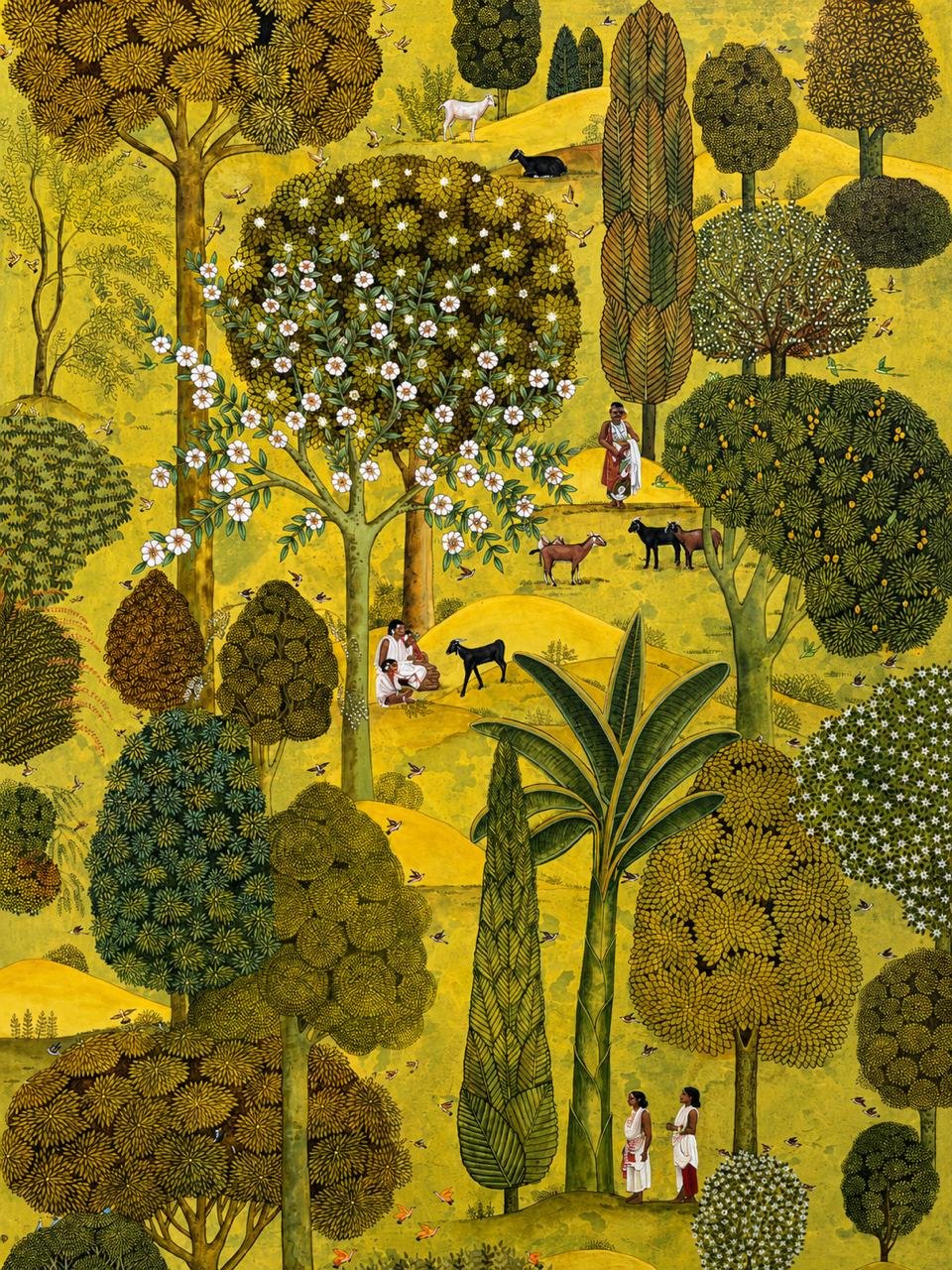
Traditional Art as a Foundation
Majhi’s academic background in Traditional Art provides an important foundation for understanding her later work. Traditional art education can offer knowledge of materials, forms, motifs, visual structures and cultural practices that have developed over generations. For Majhi, this foundation has not resulted in a practice confined to traditional formats.
Instead, traditional artistic knowledge appears to have become part of a broader contemporary vocabulary.
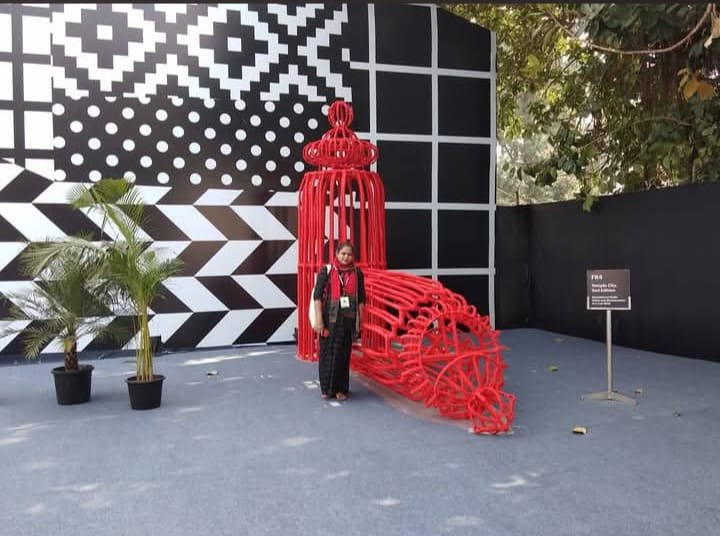
Her artistic interests extend across different mediums and forms. Painting remains an important component of her practice, while sculpture, installation, photography, mixed media and public art allow her to approach subjects from different perspectives. This multidisciplinary approach reflects the changing nature of contemporary art, where artists frequently move beyond a single medium.
Tradition and Contemporary Life
One of the recurring questions in Majhi’s work is how traditional knowledge can exist within a rapidly changing contemporary environment.
Her artistic practice explores subjects such as cultural memory, ecology, indigenous knowledge, urban transformation and relationships between people and their surroundings. These subjects naturally connect the past with the present.
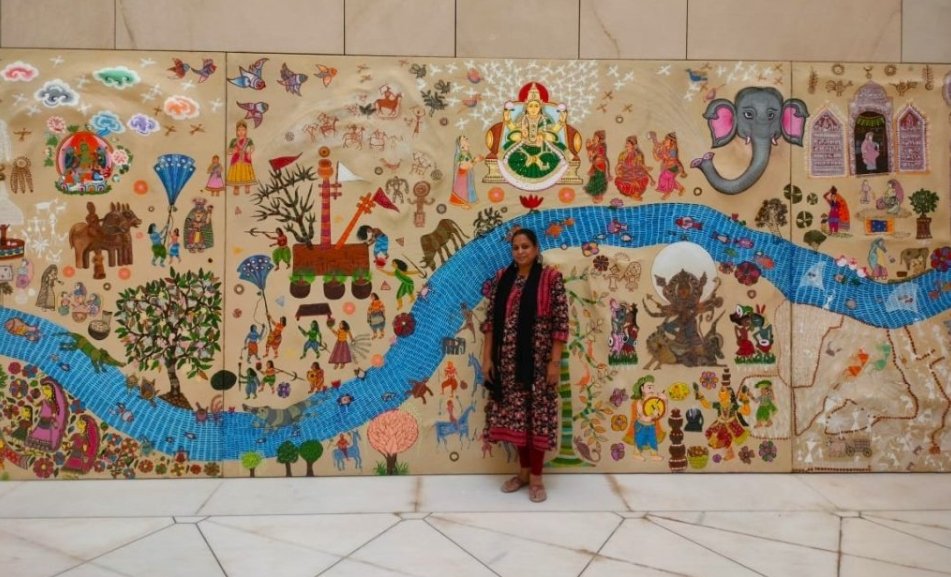
Rather than treating tradition as something fixed, her work considers how cultural knowledge continues to influence contemporary experiences. Traditional patterns, natural materials and indigenous visual references can acquire new meanings when placed within contemporary artistic contexts.
This approach is particularly visible in her engagement with the cultural landscape of Odisha.
Learning Through Cultural Engagement
Majhi’s long-term engagement with the Dongaria Kondh community and the Niyamgiri region has contributed another dimension to her understanding of traditional knowledge.
Her engagement has involved observing cultural practices, livelihood patterns, indigenous visual traditions and relationships with the natural environment. Such experiences can provide an artist with a deeper understanding of how art exists within everyday life.
For Majhi, indigenous culture is not simply a collection of visual motifs that can be transferred onto a canvas. Her practice reflects an interest in understanding the broader relationships between people, landscape, culture and knowledge.
This distinction is important in contemporary socially engaged art. It shifts the focus from representing a community as an artistic subject toward learning from cultural experiences and creating work through sustained observation and interaction.
The Triangle as a Visual Language
The triangle is one of the recurring forms associated with Majhi’s artistic vocabulary. Its significance is connected to her engagement with Dongaria Kondh visual culture and the landscape of Niyamgiri.
The form can evoke the silhouette of hills and mountains while also suggesting ideas of stability, sacred geography and divinity. Within contemporary artistic practice, such a form can operate simultaneously as a visual structure and a carrier of cultural memory.
This demonstrates how a traditional or culturally rooted visual element can be transformed into a contemporary artistic language.
The triangle is therefore not simply a decorative shape. Its meaning emerges through its relationship with landscape, culture and the artist’s accumulated experiences.
Natural Materials and Traditional Knowledge
Materials also play an important role in connecting Majhi’s practice with traditional knowledge.
Her work has explored natural materials such as chalk stone, charcoal, turmeric, geru soil and brown stone, which can be processed into pigments with suitable binders. The use of naturally sourced materials creates a direct relationship between the artwork and the environment.
This material approach also raises broader questions about sustainability, local knowledge and the relationship between art and nature.
In contemporary art, material choice can communicate ideas as strongly as imagery. When an artist chooses materials associated with a particular landscape or cultural practice, the physical substance of the artwork can become part of its meaning.
Majhi’s exploration of natural pigments therefore connects artistic experimentation with ecological and cultural awareness.
From Painting to Multidisciplinary Practice
Although painting remains central to Majhi’s artistic identity, her practice has expanded considerably. Sculpture, installation, photography, mixed media and public art provide different ways of examining the same broad concerns.
This expansion is significant because contemporary subjects often require more than one artistic language.
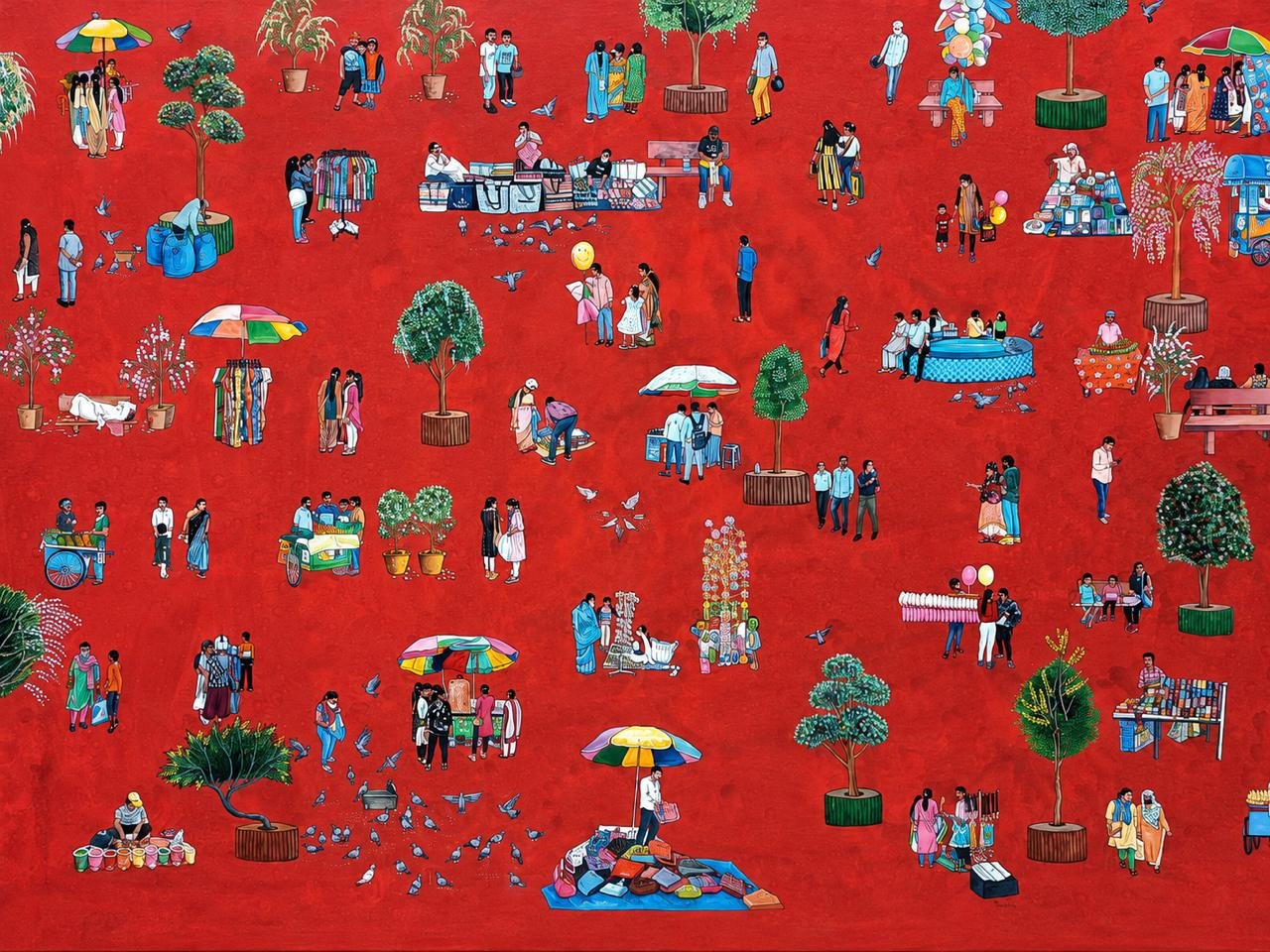
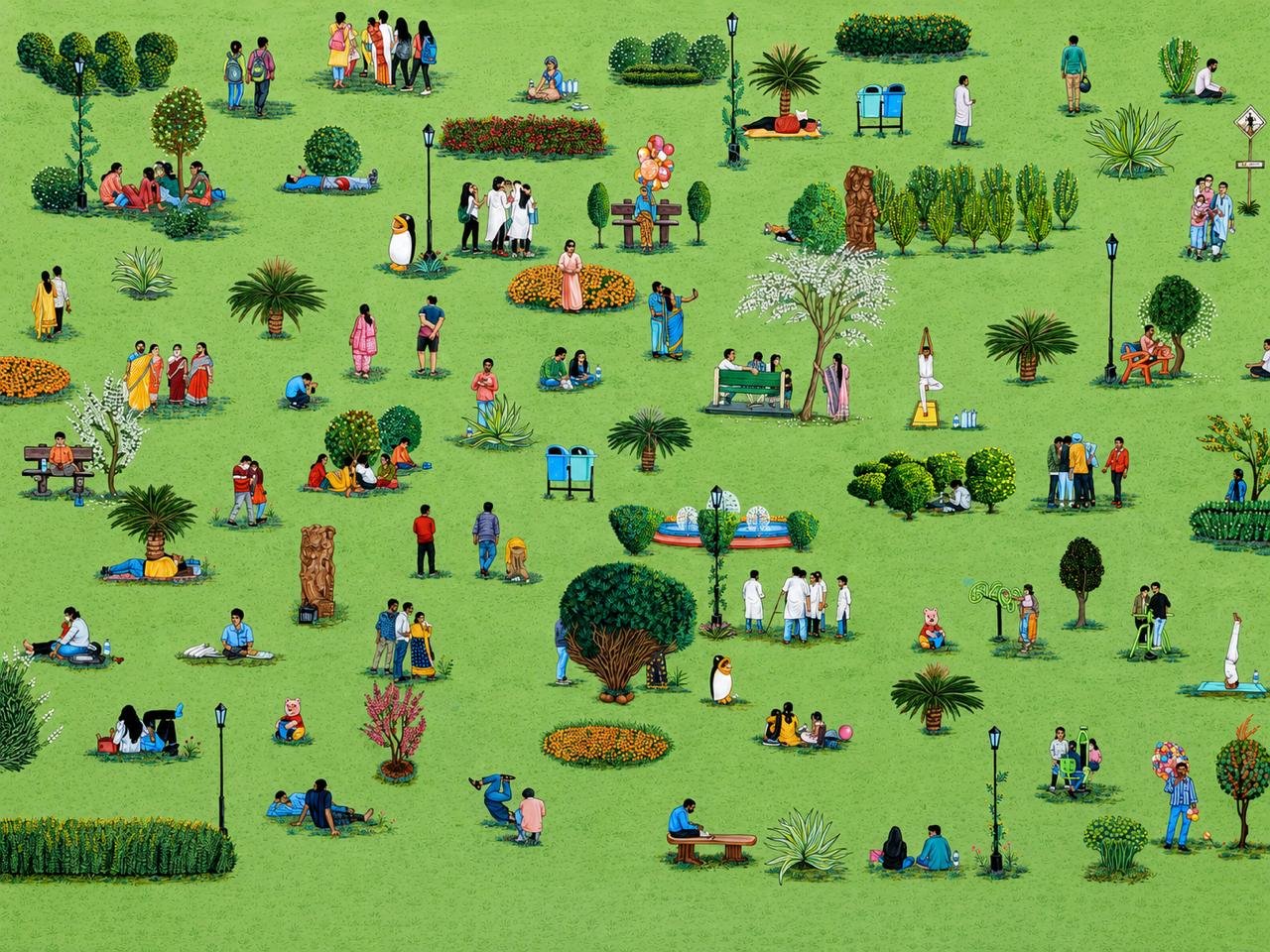
Urban transformation, for example, can be explored through painting, while public art can address the experience of a shared city space. Community projects can introduce participation and dialogue, while installation can transform the physical relationship between artwork and viewer.
Majhi’s multidisciplinary approach allows her to select different methods according to the context of a project.
Traditional Knowledge in Public Art
The relationship between traditional knowledge and contemporary practice also becomes visible in Majhi’s public-art activities.
Her large-scale murals and public interventions in Odisha demonstrate how contemporary artistic language can enter everyday environments. Public art allows visual ideas to reach audiences outside conventional gallery spaces.
In this context, culturally rooted forms and ideas can become part of shared public environments.
Her public-art projects connected with major sporting and cultural events in Odisha further demonstrate how contemporary visual practice can operate at a large scale. The artwork becomes part of the environment rather than remaining an isolated object.
Art, Memory and Place
Another important aspect of Majhi’s practice is her attention to place.
Her work moves between urban environments such as Bhubaneswar and cultural and ecological landscapes associated with Niyamgiri. These different locations provide contrasting experiences, yet both are connected through questions of identity, memory and change.
The city represents modernization, development and rapidly changing everyday life. The landscape of Niyamgiri brings forward questions of ecology, indigenous knowledge and cultural continuity.
By engaging with both environments, Majhi’s practice creates a dialogue between different forms of contemporary experience.
The Artist as Observer and Learner
Majhi’s journey also highlights the importance of observation in artistic development.
Her work with children, communities and educational institutions demonstrates an approach in which the artist is not only a creator but also an observer and learner. Listening to people, understanding their experiences and observing everyday environments become part of the creative process.
This perspective has influenced her community-based projects and educational workshops as well as her studio practice.
It suggests that contemporary art can emerge not only from imagination but also from sustained engagement with real experiences.
A Contemporary Practice Rooted in Tradition
Satyabhama Majhi’s artistic journey demonstrates that traditional art education and contemporary art practice do not necessarily exist as opposites. Traditional knowledge can provide a foundation from which new artistic languages develop.
Her work brings together inherited visual ideas, natural materials, cultural experiences and contemporary forms. Painting, sculpture, installation, photography, mixed media and public art become different tools for exploring recurring concerns about people, place, nature, memory and social change.
Her career illustrates how an artist can remain connected to cultural traditions while continuously experimenting with contemporary forms.
For Satyabhama Majhi, tradition is not simply something to preserve in its original form. It can also be observed, questioned, reinterpreted and carried into new contexts.
That movement between tradition and contemporary life has become one of the defining characteristics of her artistic practice, allowing her work to connect Odisha’s cultural and environmental experiences with wider conversations in contemporary Indian art.